


I remember the first time I worked on a campaign where the audience wasn’t just a spectator but an active participant. It felt strange and fascinating at the same time.
Instead of crafting a story from beginning to end, I had to leave space for their stories, the stories of real people.
That’s when I realized something:In the digital age, people don’t just want to watch.They want to be part of the story.
In marketing, this is a massive shift.
A classic video is a monologue: the brand speaks, and the audience listens. But a video created together with the audience becomes a dialogue or even a play where everyone has a role.
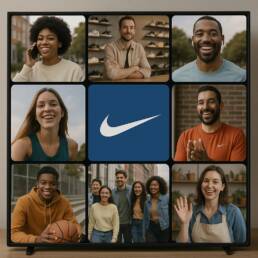
From spectators to participants
In the past, video campaigns were like movies: a fixed script, a clear message, no surprises. Today, people are used to interactivity. Scrolling on TikTok, joining live streams, participating in challenges, or exploring interactive formats has built an expectation: brands must give them an active role.
When the audience becomes co-author, they no longer see a video as a finished product. They experience it as a playground where they can experiment, create, and influence the outcome.
That’s where real engagement comes from: Not because the video is perfect, but because people feel involved.

Smart UGC: more than just reposts
UGC (User-Generated Content) is no longer about simply reposting customer photos on Instagram.
In 2025, smart UGC means creating contexts where the audience truly feels part of the story.
Examples:
- Role-based campaigns where people film their own perspectives to complement a central video.
- Creative challenges not just viral dances, but activities that genuinely spark creativity.
- Subtle brand integration where the product isn’t the hero, but rather the catalyst of an experience.
The audience shouldn’t just be a source of content. They should be a creative partner.
Brands that succeed here don’t just build temporary reach, they build long-term loyalty.
Interactive video: when stories have multiple endings
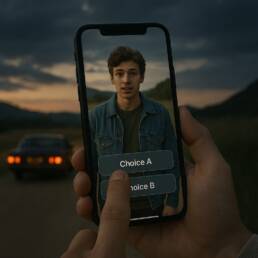
Technology has taken participation to a whole new level.
Today, there are video formats where the audience chooses the direction of the story. They click, vote, and decide what happens next.
This type of storytelling creates a much deeper connection because it:
- Triggers curiosity:“What would happen if I chose differently?”
- Activates emotion: every decision feels personal.
- Increases interaction time: people stay longer because they feel like co-creators.
Think of the difference between watching a TV ad versus being a co-director of a video. The first leaves you passive. The second makes you a creator.
The risk of losing control
When you let the audience step into the story, you inevitably give up some control.
And that scares a lot of brands. What if people change the message? What if they use the brand in unexpected ways?
The answer is simple: That’s exactly what makes it authentic.
Sometimes, small imperfections or surprises create the strongest emotional connection. It doesn’t have to be perfect. It has to be real.
A living story, shaped by genuine participation, stays with people.
Instead of a conclusion: an Invitation
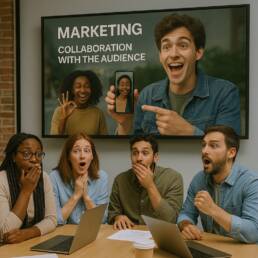
Your audience no longer wants to just buy. They want to belong. They want to create. To leave their mark.
Maybe the real question isn’t “What video should we produce?” but rather: “What story can we create together?”
