


A creative exercise about the subconscious, symbols, and dreamlike storytelling in video
When reason sleeps, the story wakes up
Ordinary ads speak to us rationally: “the product has benefits,” “the offer ends tomorrow.” But dreams don’t work like that.
Dreams don’t sell. They seduce.
They don’t convince; they touch.
They don’t explain; they show fragments of emotion.
The images in a dream are often chaotic, yet unforgettable, because they awaken feelings logic can’t translate.
A memorable ad should be the same, an emotional collage that lingers in the mind long after it ends.

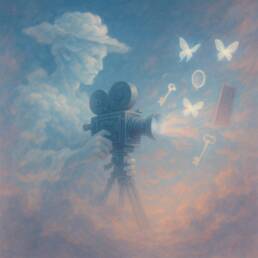
The Subconscious – The director in the shadows
When we sleep, the brain edits its own movie. It blends fears, desires, memories, and projects them into an inner film.
In marketing, the same subconscious zone silently decides whether we love or reject a brand.
An ad “made by a dream” would speak directly to that part of us:
- It would use symbols instead of explanations.
- It would create emotions, not arguments.
- It would build images that feel familiar; as if you’ve seen them somewhere before, inside your own mind.
The truth is: the subconscious loves mystery. It thinks in associations, not sentences.
Symbols that speak without words
If we translated dreams into visual language, they would look like surreal commercials.
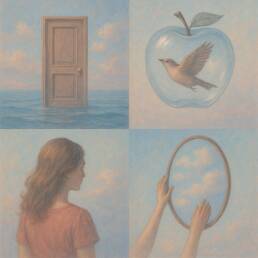
An apple would become temptation.
A door — the courage to explore the unknown.
A bird — freedom.The sea — the subconscious itself.
That’s why some iconic ads stay in our memory not for their explicit message, but for their symbols:
- Coca-Cola: joy, connection, childhood; without ever saying those words.
- Dove: wings, mirrors, skin; metaphors of confidence.
- Gucci: dream, mystery, art, fantasy.
A dream-made ad would be a sequence of symbols that aren’t meant to be understood logically.
They’re meant to be felt.
What a story without structure but full of meaning looks like
Traditional ads follow a structure: problem → solution → benefit → brand.
A dream-made ad wouldn’t follow that order.
It would be an emotional flow, a blend of scenes that, on their own, seem unrelated, but together create a coherent feeling. Just like in a dream: it makes no sense until you wake up. And then you realize it all had a hidden logic.
The audience doesn’t need to understand everything.
They just need to feel something real.

What brands can learn from the world of dreams
Brands brave enough to communicate through dreamlike imagery don’t sell products, they sell states of being.
A perfume isn’t about scent; it’s about memories.
A coffee isn’t about caffeine; it’s about morning calm.
A piece of jewelry isn’t about gold; it’s about promise.
Ads that touch the subconscious aren’t explained, they’re experienced.
They awaken the desire to feel that emotion again.
Dreams, in that sense, are the best storytelling teachers, because they don’t remember facts, they remember sensations.

Conclusion: The most honest storytelling explains nothing
Maybe an ad made by a dream wouldn’t pass a classic brief.It wouldn’t have a CTA, nor a list of benefits.
But it would stay with you for days.
Dreams don’t sell. They touch.
And that’s exactly what great visual storytelling should do, linger in the mind like an unspoken emotion.
At Cabo Studio, we believe true creation begins where logic ends.
That sometimes, you must descend into the subconscious to rise into emotion.
Because a well-told dream can sell more than a thousand arguments.
