


When time slows, emotion rises
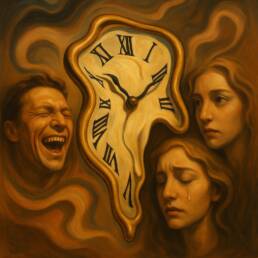
Have you ever felt like an intense moment in your life was happening in slow motion? A last-minute goal, a long-awaited embrace, a shocking event. Our brain slows down our perception when emotion is powerful.
Filmmaking and advertising have understood this for a long time. Slow motion isn’t just a visual effect; it’s a technique that multiplies emotion. Each second becomes heavier, each detail more important, each expression more intense.
Slow motion isn’t just about “cool aesthetics.” It’s the visual language that amplifies emotion and makes it stick in our memory for longer.

How the brain perceives and distorts time
The brain doesn’t perceive time as a linear clock. In intense moments, our emotional memory becomes highly active and registers every detail more carefully, giving us the sensation that time has dilated.
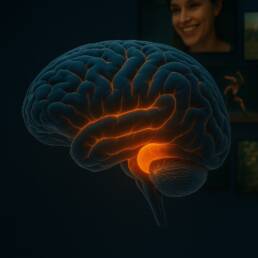
Studies show that in emotional situations (danger, extreme joy, shock), the limbic system (specifically, the amygdala) becomes hyperactive and “records more frames per second” than usual. The result? We feel like the moment lasts longer.
Slow motion in a video replicates this exact natural effect. It makes your brain believe it’s experiencing something of great importance.
Why slow motion amplifies emotion
When you see a slowed-down shot, you have time to:
- Observe details (a tense muscle, a tear, a subtle glance).
- Feel the emotion more intensely (the slowed sound, the prolonged breath).
- Create clearer memories (because your subconscious associates duration with importance).
Essentially, slow motion is an “emotional zoom” on the moment. It tells you: “Look here, this matters.”
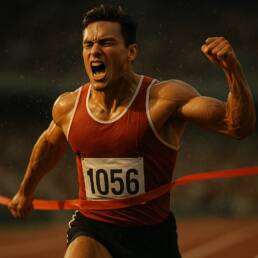
Example: A runner crossing the finish line at real speed is impressive. But in slow motion, you see the sweat, the closed eyes, the maximum effort. The emotion is tripled.
Slow motion in famous films and ads
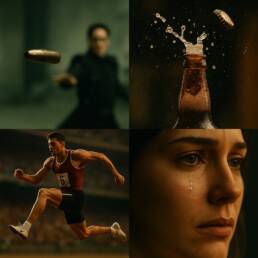
- The Matrix (1999): The famous “bullet time” effect changed cinema. Seeing the bullet slowed down makes the scene more intense and memorable.
- Nike: In their commercials, athletes captured in slow motion make every detail of their effort and perseverance a powerful symbol.
- Beverage Ads: The moment a bottle opens and drops roll slowly down the cool surface. Each time, the effect is the same: thirst and desire.
- Music Videos: Slow motion on faces, hands, or objects amplifies the emotional intensity of the music.
Why does a slow-motion shot stick in your mind?
Slow motion activates the amygdala and hippocampus, the regions responsible for emotion and memory. By slowing down, the brain has time to process and fix the details better.
Eye-tracking studies show that people look more closely and for longer at slow-motion shots. The consequence? Brands that use this technique have a higher memorability rate.
In short: what is slowed down becomes important to the subconscious.
Conclusion: the power of slow emotion in storytelling
Slow motion isn’t just a spectacular visual effect; it’s a psychological technique. It mimics the way the brain perceives reality in moments of maximum intensity.
That’s why ads, films, and videos that use slow motion don’t just look better—they feel better. They enter the subconscious and create clearer, more emotional, and more lasting memories.
At Cabo Studio, we believe that sometimes emotion needs to breathe. And that when you slow down time, the story becomes more intense and memorable.
